
I never thought I would spend $500,000 on print ads. If you had asked me before 2022, I would have told you that print was dead. Digital was the only way to grow. Yet here I am, telling the story of how that money helped me grow organic traffic by 500 percent.
It all started in December 2021. That was when traffic to Moneywise.ca began to climb. Google rolled out the December 2021 Product Reviews update and we were getting more visibility in search. Our content was being recognized as useful and trustworthy. This was the first spark of growth.
When you see momentum in organic search, you don’t sit back. The right action was to lean in to it. So I hired an SEO specialist to work alongside our SEO manager in February 2022. Her job was to focus on content updates, schema, sitemaps, and page structure. The details are not glamorous, but they matter. Cleaning up the site gave Google more clarity. Optimized content gave readers more value. Together, those things pushed our traffic higher.
Then came the print ads. And this is where the story takes a turn.
In the spring of 2022, our parent company, Legend, decided they wanted to purchase 100% of Wise Publishing. At the time, Postmedia held 10 percent. To complete the sale, we had to buy back their shares. The cost was $2 million, plus $500,000 in capital gains.
Here was the catch. Since the 500k was capital gains, the operations team could not use that for operations. The money had to go back into their cash reserves. This was a problem since the operations team did all the work managing the relationship and purchasing Wise Publishing in the first place; they wanted to keep the profit for operational activities. The workaround was very unusual. They proposed that the $500,000 be spent on Postmedia print ads instead. This meant the capital gains were now ad revenue for the operations department… clever.
So, as part of the arrangement, Wise Publishing would buy back $2 million in shares plus purchase $500 thousand in print ads.
I never would have chosen to spend money on print ads. Not in a million years. But this was the only way forward. So we split the cost with our sister company Covers.com and built a media plan. The entire $500,000 had to be spent by August 31. We got to work.
The first placement went out in August. it was a full cover page ad in the National Post. We included a QR code that led to a landing page where readers could sign up for our newsletter. The result was humbling. Not a single sign-up. Not one. The QR code idea was a bust.
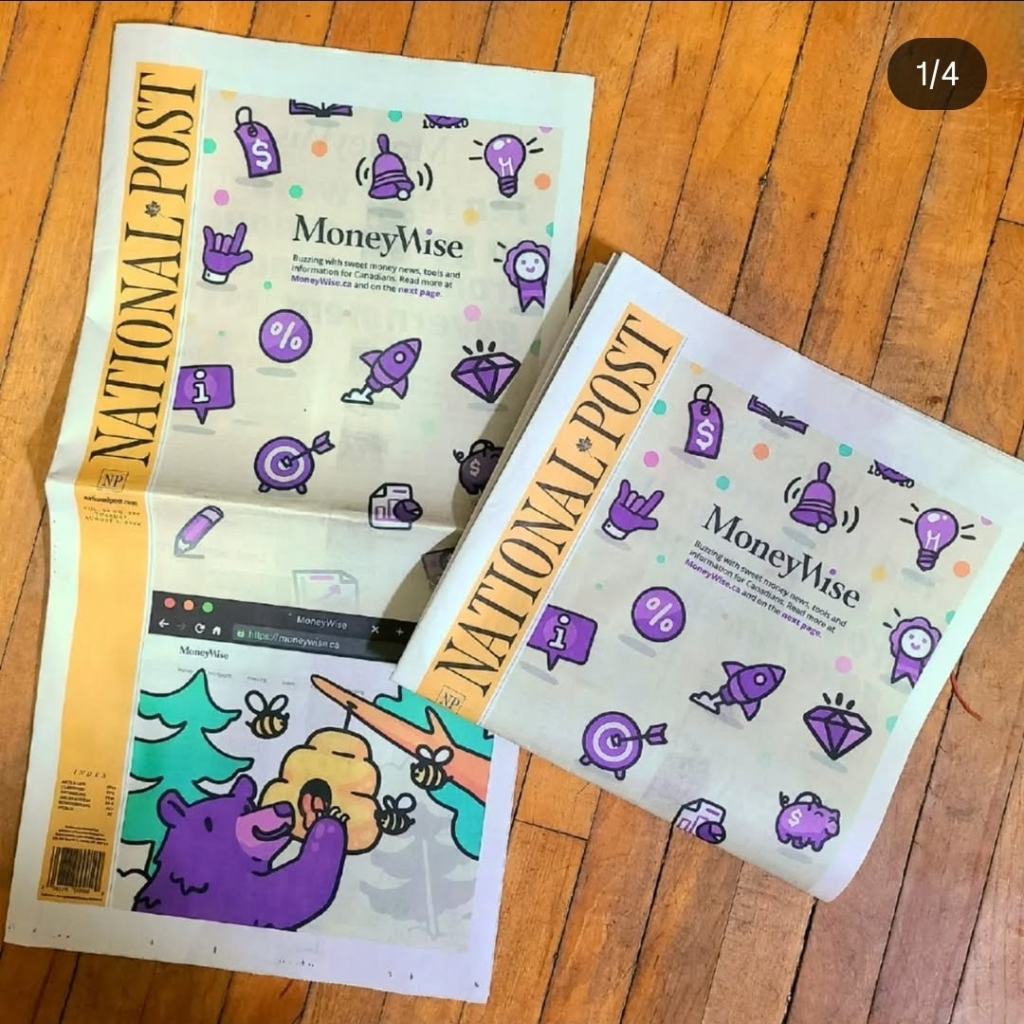
But something unexpected happened. Our organic traffic took off.
We were already riding momentum from the Google Product Reviews update in December and the Core update in May. Our SEO team had been cleaning up content and technical issues. But when the print ads started to run, our organic growth went into overdrive.
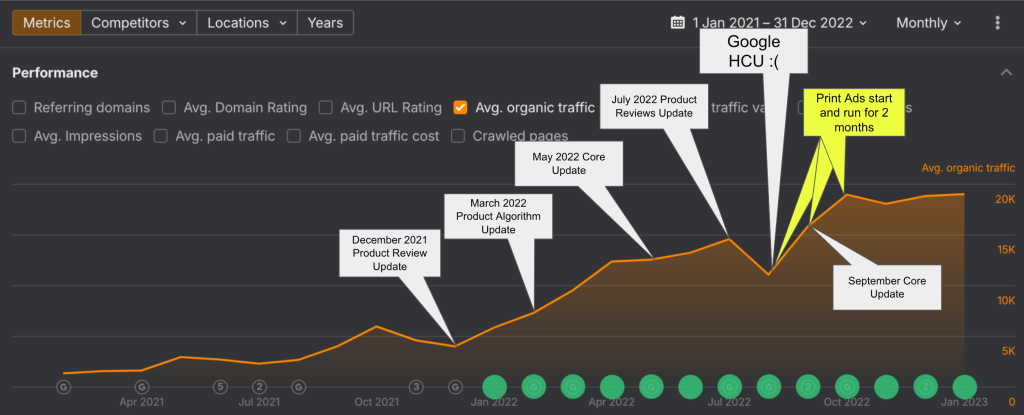
Traffic grew from 11,000 in August to 18,000 by October. That is a 63 percent jump in just two months. It was hard to ignore.
So what happened? I believe the print ads worked in a way that was invisible at first.
When people saw our name in print, they became curious. They went online and searched for us. Some of those searches led to direct visits. Others created unlinked brand mentions across the web.

Unlinked brand mentions might not seem powerful, but they are. Google has become very good at connecting brand signals. When users search for your brand, it tells Google that you are relevant. When your name appears in articles without a link, it still signals authority. The more people talk about you, the stronger your reputation becomes in the eyes of both readers and search engines.
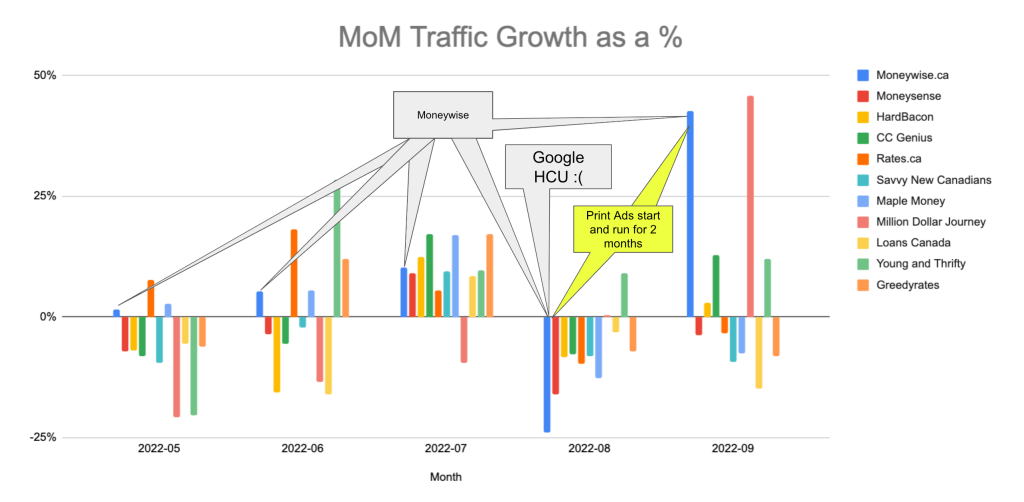
You can see this in the chart below when Moneywise is compared to its competitor set. Moneywise organic traffic skyrockets in August with the launch of the print ads.
Websites with more brand authority and brand mentions rank disproportionately better. This is why big names like Forbes or NerdWallet dominate search results. They are not always producing the best content, but they have strong brand signals. They are everywhere. Google notices.
Today, brand mentions = trust signals
Search Engine Land
In our case, the print ads amplified that effect. The ads created conversation. The ads lived both in newspapers and in digital versions online. Readers typed our name into Google. That activity, combined with our ongoing SEO improvements, gave us an organic boost that our competitors could not match.
The irony is that I would never have chosen print on my own. It was forced on us by circumstance. But the lesson is clear. Brand matters. Awareness matters. Even in the digital age, the physical world can impact the algorithms that drive online growth.
By the end of 2022, our organic traffic had grown by more than 500 percent compared to where we were a year earlier. It was not just one thing. It was three things working together.
- First, the Google updates that rewarded quality content.
- Second, the SEO specialist who made sure our content and technical structure were the best they could be.
- Third, the print ads that created a buzz and strengthened our brand signals.
None of these factors would have received the same results alone. Together, they created a surge that changed the trajectory of our Canadian website.
I still would not recommend print ads as a first choice. If you gave me $250,000 today, I would not put it in newspapers. But I learned that growth can come from surprising places. Sometimes the strategies you never would have picked turn out to be the ones that move the needle.
And sometimes, making lemonade out of lemons leads to results you never imagined.
Credit
CEO: Kyle Trattner
Campaign Management and Planning: Kris Bruynson
Art Direction: Steven Twigg
SEO: Deepti Gurav, Cara Pace
 Kris Bruynson
Leave a comment